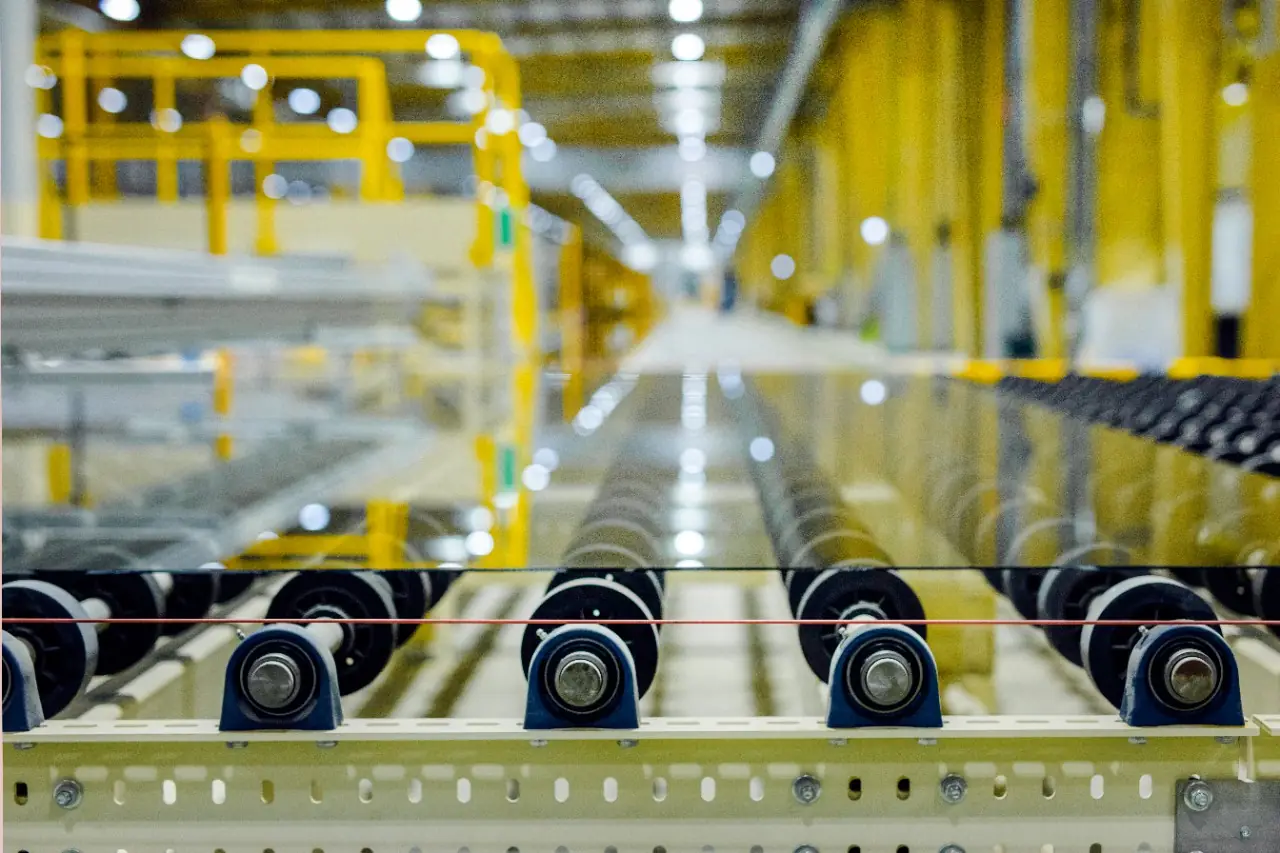
The American glass manufacturing industry operates at the intersection of heavy industrial processing and advanced chemical engineering. Furthermore, structural engineers and commercial developers continuously navigate supply chains shaped by regional energy costs and strict environmental compliance mandates. Consequently, selecting premier glass production partners has evolved into a critical technical evaluation that determines structural safety and thermal efficiency.
Evaluating this nationwide industrial landscape requires examining proprietary coating technologies, float-line proximity, and tempering capabilities. Modern construction sectors face extreme weather volatility and escalating energy performance standards. Therefore, analyzing the operational capacity behind the best glass manufacturers united states demands an exhaustive understanding of how primary float producers and secondary fabricators execute complex technical specifications.
This analysis establishes an analytical framework for navigating the American glass manufacturing sector. By examining historical context, operational mental models, market variations, and risk management strategies, this reference serves as a definitive blueprint for high-performance glass specification.
Understanding “Best Glass Manufacturers United States”

The practice of evaluating the best glass manufacturers united states involves navigating a complex intersection of thermal performance metrics, optical clarity standards, and heavy industrial logistics. A pervasive misconception among project specifiers is that high-volume output guarantees that a manufacturer can deliver custom-engineered low-emissivity coatings or blast-resistant laminates for a specific regional project. In reality, a massive float facility optimized for standard residential windows can prove entirely unsuited for producing curved or electrochromic smart glass required for advanced commercial facades.
Oversimplification risks abound when developers focus exclusively on initial material pricing while ignoring optical distortion limits, coating durability, and transportation logistics for oversized lites. For instance, selecting a distant supplier to minimize raw unit costs often introduces severe transit risks and edge damage during long-haul trucking. Furthermore, treating glass as a uniform building commodity obscures the critical necessity of matching thermal expansion coefficients, frame-glazing compatibility, and solar heat gain coefficients to local climate zones.
A comprehensive evaluation requires analyzing the best glass manufacturers united states through an integrated supply-chain and performance lifecycle lens. Excellence encompasses primary raw material purity, precision float-line annealing, magnetron sputtering vacuum deposition for coatings, and rigorous post-fabrication quality assurance. When any single manufacturing variable is compromised, the entire glazing assembly risks premature seal failure, optical degradation, and code non-compliance.
Deep Contextual Background
Historically, American glass production relied on localized glassblowing and rudimentary cylinder-blown sheet methods. Output was severely constrained by manual labor and thermal furnace limitations. Then, the introduction of the continuous ribbon process transformed American manufacturing completely. Subsequently, the float glass process invented by Alastair Pilkington allowed liquid glass to float on molten tin. Thus, factories produced ultra-flat, distortion-free sheets at an unprecedented industrial scale.
The late twentieth century reshaped the domestic glass industry dramatically through the introduction of energy-conscious building codes, magnetron-sputtered low-emissivity coatings, and stringent safety glazing mandates. Rising energy costs catalyzed the development of insulated glass units and advanced solar-control coatings. Simultaneously, domestic manufacturing plants consolidated around major multinational corporations and specialized regional fabricators. Consequently, this created a high-tech industrial ecosystem focused on thermal optimization and structural resilience.
In contemporary American real estate, the regulatory and environmental context demands even higher standards of performance. Modern energy codes, stringent hurricane-impact testing requirements, and zero-carbon building targets dictate precise material specifications. Therefore, project stakeholders can no longer rely on generic product categories. Instead, successful glass selection requires systematic evaluation of manufacturer capabilities, optical testing reports, and long-term thermal warranty backing.
Conceptual Frameworks and Mental Models
Navigating the specification and procurement of advanced glass products requires specific mental models that bridge material science with industrial supply chain management.
The Thermal-Optical Performance Equilibrium
This framework dictates that optimizing a glass pane involves balancing trade-offs across multiple microscopic metallic coating layers. Enhancing thermal insulation often reduces natural daylight transmission. Therefore, engineers use a precise mathematical model that weighs local climate solar radiation against interior lighting energy loads.
The Float-to-Fabrication Logistics Matrix
Glass is an exceptionally heavy, fragile, and dimensionally sensitive material that resists long-distance transit once cut or insulated. This mental model establishes that proximity between primary float lines, secondary fabricators, and final installation sites dictates project budget stability and damage risk mitigation.
The Lifecycle Durability and Seal Integrity Paradigm
Evaluating the true quality of a glass manufacturer requires looking beyond initial aesthetic brilliance to analyze edge-seal construction and coating adhesion durability. This model calculates the long-term resistance of insulated units against moisture vapor penetration over decades of thermal cycling.
Key Categories or Variations in Glass Manufacturing Models
The landscape of glass production across the American market varies according to primary output type, degree of vertical integration, and target industrial sector. Each category presents distinct operational trade-offs and project suitability profiles.
-
Primary Float Glass Producers: Capital-intensive industrial enterprises operating continuous 24/7 melting furnaces that produce base raw glass sheets. Delivers immense volume capacity, but lacks direct custom fabrication flexibility for end-use framing.
-
Architectural Glass Fabricators: Specialized plants that purchase raw float glass and apply high-performance low-E coatings, heat-strengthening, tempering, and lamination. Provides customizable building envelope solutions, but relies heavily on primary float supply stability.
-
Automotive OEM Glass Manufacturers: High-volume automated facilities producing laminated windshields and tempered sidelites meeting rigorous Department of Transportation safety standards. Ensures extreme impact safety, but operates on rigid automotive supply cycles.
-
Specialty Technical and Optical Glass Makers: Niche manufacturers producing borosilicate, quartz, and ultra-thin glass for aerospace, medical, and defense applications. Delivers extreme thermal shock resistance, but at specialized, low-volume cost structures.
-
Electrochromic and Smart Glass Innovators: Advanced technology manufacturers producing dynamic glass systems that tint electronically to control solar glare and heat gain. Eliminates the need for physical window blinds, but requires complex low-voltage electrical integration.
-
Decorative and Interior Glass Processors: Fabricators specializing in back-painted, acid-etched, ceramic-fritted, and custom-laminated glass for interior architectural spaces. Enhances aesthetic design freedom, but limited to non-load-bearing interior applications.
| Manufacturer Category | Primary Industrial Output | Capital Intensity | Customization Flexibility | Primary Operational Risk |
| Primary Float Producers | Raw flat glass ribbons | Extreme | Low (Standard thicknesses/sizes) | Furnace failure and energy cost spikes |
| Architectural Fabricators | Coated, tempered, laminated lites | High | High | Coating defects and transit breakage |
| Automotive OEM Makers | Windshields, sidelites, sunroofs | High | Moderate | Supply chain rigidity and recall exposure |
| Technical Glass Makers | Borosilicate, quartz, optical glass | Moderate | High | Niche material scarcity |
| Smart Glass Innovators | Electrochromic dynamic units | High | Moderate | System electronic integration failures |
Realistic Decision Logic
Selecting the appropriate glass manufacturing partner requires a rigorous assessment of project scope, environmental exposure, and structural engineering requirements. If, for instance, a commercial high-rise developer is designing a glass curtain wall in a hurricane zone, engaging premier architectural fabricators like Viracon or Oldcastle BuildingEnvelope ensures access to certified hurricane-impact laminated units. Conversely, a tech-forward corporate campus seeking dynamic energy management should evaluate electrochromic specialists like SAGE Electrochromics to optimize solar heat rejection dynamically.
Detailed Real-World Scenarios
Analyzing practical execution environments illuminates how material constraints and logistical challenges interact across diverse American commercial and industrial sectors.
A : High-Rise Commercial Tower in Chicago, Illinois
-
Constraints: Severe winter wind loads, stringent energy code requirements, urban logistical staging limits.
-
Decision Points: The project specifiers partner with a leading primary and coated glass producer like Vitro Architectural Glass to supply high-performance low-E insulating glass units.
-
Failure Modes: The jobsite contractor attempts to store oversized insulating glass units in direct sunlight without adequate ventilation spacers before installation.
-
Second-Order Effects: Thermal stress breakage occurs due to differential edge-to-center temperature gradients, requiring costly emergency replacements.
B : Coastal Luxury Residence in Miami, Florida
-
Constraints: High-velocity hurricane-impact wind loads, aggressive salt-spray corrosion, intense solar UV exposure.
-
Decision Points: The architect specifies heavy custom laminated glass assemblies featuring high-durability interlayers and marine-grade protective coatings.
-
Failure Modes: Fabricators utilize substandard polyvinyl butyral interlayers that lack adequate UV stabilization for tropical coastal environments.
-
Second-Order Effects: Delamination and yellowing occur within three years of installation, destroying optical clarity and violating building envelope warranties.
C : Advanced Medical Research Facility in Boston, Massachusetts
-
Constraints: Strict indoor temperature stability, acoustic isolation from urban transit, precise daylight control.
-
Decision Points: The engineering team engages a specialized technical glass processor to fabricate asymmetric acoustic laminated glass with custom ceramic frit patterns.
-
Failure Modes: Field installers fail to verify rough opening squareness, forcing excessive shim pressure against the glass edge during mechanical setting.
-
Second-Order Effects: Point-load pressure spikes induce stress fractures across tempered lites, resulting in sudden glass failure and acoustic compromise.
Planning, Cost, and Resource Dynamics
Establishing economic control over large-scale glass procurement initiatives requires analyzing a complex matrix of direct and indirect financial commitments.
Direct costs encompass raw float glass material expenses, magnetron coating application fees, tempering and lamination processing, and specialized crating. Meanwhile, indirect costs represent the financial friction of transport insurance, specialized A-frame trucking logistics, and jobsite storage management.
Opportunity costs manifest as the schedule delays associated with long-lead custom glass fabrication cycles. Rushing specification approvals or ignoring mill production schedules routinely invites catastrophic project delays that consume multiple times initial financial contingencies.
| Expense Category | Description / Typical Elements | Financial Volatility | Optimization Potential |
| Raw Float & Coating Material | Base silica glass, metal oxide layers | High (Energy and commodity dependent) | Low (Mandatory performance specs) |
| Secondary Fabrication | Tempering, lamination, insulating seals | Moderate | Moderate (Standardized sizing) |
| Specialized Transport & Crating | A-frame steel racks, air-ride trucking | Moderate | High (Local regional sourcing) |
| Contingency Reserves | Breakage replacement, storage delays | High | Maximum (Proactive site staging plans) |
Tools, Strategies, and Support Systems
Executing flawless glass specification and installation management requires an advanced suite of specialized physical equipment, digital simulation tools, and administrative support systems.
-
Advanced Thermal and Optical Modeling Software: Digital simulation tools like Optics and Window software used to calculate exact solar heat gain and U-factors.
-
Hydraulic Glass Manipulation Cranes and Vacuum Cups: Essential machinery designed to lift and position heavy, fragile glass lites safely on active job sites.
-
Digital Spectrophotometers: Quality control instruments used to verify coating uniformity and color consistency across disparate manufacturing batches.
-
A-Frame Steel Transport Racks: Specialized heavy-duty structural frames engineered to secure glass lites vertically during long-haul transit.
-
Infrared Thermography Cameras: Diagnostic devices used post-installation to detect seal failure, gas fill loss, or thermal bridging in insulating glass units.
-
Comprehensive Manufacturer Warranty Frameworks: Standardized legal agreements detailing multi-year seal failure, coating degradation, and glass breakage coverage.
Despite their utility, limits exist within these support systems. For example, computer optical models can fail to account for site-specific reflections and environmental dirt accumulation. Therefore, administrative discipline remains entirely dependent on experienced human oversight during factory inspections.
Risk Landscape and Failure Modes
Failing to secure disciplined manufacturing partnerships and rigorous quality control triggers a compounding cascade of physical and financial degradation across building envelopes.
The primary operational risk is premature insulated glass unit seal failure and internal condensation. When secondary sealants are improperly applied or exposed to incompatible cleaning chemicals, moisture vapor enters the cavity. Consequently, this destroys the insulating gas fill and leaves permanent water spots on internal glass surfaces.
Furthermore, compounding risks emerge when architectural glass manufacturers fail to perform adequate heat-soak testing on tempered glass. As a result, microscopic nickel sulfide inclusions remain, which can cause spontaneous glass shattering in high-rise facades.
Governance, Maintenance, and Long-Term Adaptation
Maintaining the performance efficiency, structural integrity, and aesthetic clarity of installed glass assets requires ongoing governance and adherence to industry standards.
Governance relies on standards established by organizations such as ASTM International, the National Fenestration Rating Council, and the Glass Association of North America. Contracts must explicitly define multi-year warranty obligations, seal failure replacement windows, and optical distortion tolerances.
Routine maintenance cycles should involve semi-annual gentle washing with non-abrasive pH-neutral solutions, inspection of perimeter wet-sealant joints, and checks for frame drainage blockage. Whenever building facade conditions change, professional evaluations ensure ongoing compliance with safety and energy codes.
Long-Term Glass Asset Governance Checklist
-
Semi-Annual Visual Inspection: Check exterior glass surfaces for coating degradation, scratching, or sealant cracking.
-
Perimeter Wet-Sealant Evaluation: Inspect structural silicone and weather-seal joints annually for adhesion loss or weathering.
-
Condensation and Seal Check: Monitor interior glass perimeters for fogging or moisture accumulation indicating insulating unit seal failure.
-
Drainage and Weep System Audit: Ensure frame weep holes remain clear of dirt and debris to prevent water pooling against glass edges.
Measurement, Tracking, and Evaluation
Evaluating the long-term success of glass manufacturing and installation requires balancing quantitative performance metrics against qualitative visual inspections.
Leading indicators include manufacturer quality assurance certificates, batch color consistency logs, and NFRC thermal performance ratings. Lagging indicators encompass post-installation service call rates, seal longevity records, and building energy efficiency audits.
Documentation Framework Examples
-
Manufacturer Certificate of Analysis: A formal quality report verifying glass thickness, tempering compliance, and coating emissivity standards.
-
Batch Color and VLT Verification Log: A tracking document ensuring visual light transmittance consistency across all panels delivered to a job site.
-
Heat-Soak Testing Report: An industrial test certification confirming that tempered glass lites have been stress-tested to eliminate nickel sulfide inclusions.
-
Comprehensive Glass Warranty Documentation: A centralized file recording manufacturer guarantees for seal failure, coating integrity, and glass breakage replacement terms.
Common Misconceptions and Oversimplifications
-
Misconception 1: All clear float glass produced by major manufacturers is optically identical.
-
Correction: Variations in raw material purity, iron content, and float-line thickness tolerances mean that glass from different manufacturers can exhibit noticeable color tints.
-
-
Misconception 2: Insulated glass unit seals provide permanent, maintenance-free performance for the life of a building.
-
Correction: Sealants are organic barriers subject to environmental degradation; all IGUs have a finite lifespan before seal failure and moisture infiltration occur.
-
-
Misconception 3: Tempered glass is completely indestructible against all forms of impact.
-
Correction: While tempering increases resistance to blunt force, tempered glass is vulnerable to edge impacts and can experience spontaneous shattering due to internal inclusions.
-
-
Misconception 4: Low-E coatings can be applied to any glass surface at any stage of fabrication.
-
Correction: High-performance magnetron-sputtered low-E coatings require highly controlled vacuum chamber environments and cannot be retrofitted easily in the field.
-
-
Misconception 5: Selecting the manufacturer with the lowest base material cost ensures overall project economy.
-
Correction: Low-cost glass suppliers frequently incur hidden expenses due to higher transit breakage rates and inconsistent fabrication tolerances.
-
-
Misconception 6: Standard window glass provides adequate protection in high-velocity hurricane or seismic zones.
-
Correction: Special building codes mandate certified laminated safety glass assemblies designed to remain intact within frames during high wind or seismic displacement events.
-
Ethical, Practical, and Contextual Considerations
The responsibility of executing major glass manufacturing and architectural supply operations extends far beyond commercial contract fulfillment. Furthermore, it touches upon occupant life safety, energy conservation, and industrial environmental stewardship. The built environment represents massive capital investments and critical human shelters. Consequently, careless manufacturing or specification practices result in structural hazards, catastrophic facade failures, and immense financial devastation.
Practically speaking, ensuring uncompromising quality control and material testing protects building occupants from laceration hazards, falling glass debris, and thermal envelope failures. Therefore, industry professionals hold an ethical obligation to maintain rigorous technical standards, honoring the public trust, environmental health, and structural safety of every structure they glaze.
Conclusion
Securing structural longevity, thermal efficiency, and long-asset value across American architecture and industry requires absolute mastery of glass manufacturing mechanics. By prioritizing verified manufacturer capabilities, rigorous optical testing, transparent warranty terms, and disciplined supply-chain management over surface-level pricing, project stakeholders can identify true execution excellence. Ultimately, navigating the industrial market with this rigorous analytical mindset ensures that every glass specification achieves peak structural performance, financial safety, and lasting aesthetic brilliance over its entire operational lifecycle.