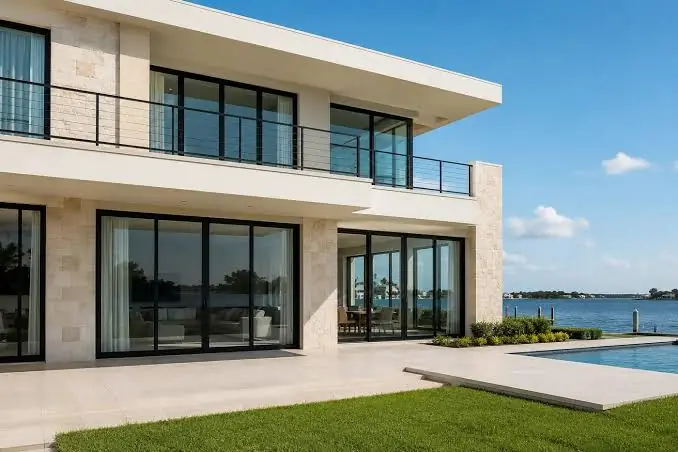
Residential architectural development across the United States increasingly depends on thermal performance, structural clarity, and environmental resilience. Furthermore, property owners, historic preservationists, and architectural engineers continuously reevaluate how transparent assemblies interact with regional climate demands, municipal codes, and energy markets. Consequently, modern capital improvements have elevated architectural transparency and glass engineering into a specialized discipline that dictates operational longevity.
Evaluating this nationwide shift requires a clear look past aesthetic preferences. Specifically, one must examine thermal physics, molecular coatings, gas dynamics, and structural load distribution. Modern houses face unprecedented challenges, including extreme weather volatility, stringent municipal carbon reduction targets, and rising utility overheads. Therefore, specifying the best residential glazing united states demands an exhaustive understanding of how multi-pane glass units, gas fills, pyrolytic coatings, and thermally isolated framing perform under environmental stressors.
This analysis provides an analytical framework for navigating American residential transparency engineering. By examining historical context, engineering mental models, structural variations, economic dynamics, and risk management strategies, this guide establishes a definitive reference for high-performance home envelope optimization.
Understanding “Best Residential Glazing United States”

The practice of identifying the best residential glazing united states involves navigating building science, regional climate adaptation, and advanced manufacturing standards. A pervasive misconception among homeowners is that high-end glazing systems are universal commodities. Specifically, higher retail prices do not automatically guarantee proportional energy savings or durability across all geographies. In reality, a triple-pane glass package optimized for a sub-zero New England winter can induce severe thermal stress fractures. Thus, it can cause interior overheating if inappropriately specified for a desert climate in the American Southwest.
Oversimplification risks abound when contractors focus exclusively on initial U-factor or Solar Heat Gain Coefficient ratings. For instance, they often ignore whole-window thermal bridging, rough opening compatibility, or framing interaction nuances. Pairing heavy architectural glass panes with flexible frames without assessing structural deflection limits leads directly to seal failure and air infiltration. Furthermore, treating glass selection as an isolated purchase obscures the critical importance of edge-seal chemistry, desiccant saturation capacity, and continuous frame-to-wall water management integration.
A comprehensive evaluation requires analyzing the best residential glazing united states through an integrated lifecycle lens. Excellence encompasses pre-installation structural engineering, precise solar orientation matching, specialized heavy rigging, multi-stage framing integration, and long-term maintenance governance. When any single variable is overlooked, the transparent envelope compromises its performance. Consequently, this results in thermal bridging, acoustic leakage, premature gas loss, and condensation.
Deep Contextual Background
Historically, American residential construction relied on single-pane glass set within heavy timber or structural steel frames. Thermal efficiency was entirely secondary to basic light admission and natural ventilation. Buildings breathed through loose construction tolerances, allowing moisture and air to move freely through wall cavities and window perimeters without causing trapped condensation. As regional timber supplies shifted and early twentieth-century manufacturing matured, double-hung wood windows became the national standard. Nonetheless, thermal insulation performance remained exceptionally low by modern metrics.
The mid-to-late twentieth century transformed the American fenestration landscape dramatically following the 1970s energy crises. Rising fuel costs catalyzed the introduction of double-glazed insulated glass units, aluminum extrusions with thermal breaks, and metallic oxide films. Simultaneously, building codes incorporated mandatory energy conservation metrics, forcing glass fabricators to innovate rapidly. Subsequent decades introduced pyrolytic and sputtered low-emissivity coatings, inert gas fills like argon and krypton, and warm-edge spacer technologies. Thus, the market shifted away from drafty historical assemblies toward highly engineered thermal barriers.
In contemporary American real estate, the regulatory and environmental context has evolved even further. Modern energy codes, stringent hurricane-impact requirements in coastal zones, and strict acoustic mandates dictate specific rules. Specifically, the best residential glazing united states must satisfy rigorous multi-hazard performance criteria. Consequently, property owners can no longer rely on traditional rules of thumb. Instead, successful specification requires advanced thermodynamic coordination and certified manufacturing tolerances.
Conceptual Frameworks and Mental Models
Navigating the execution of high-performance glass projects requires specific mental models that bridge building physics with elite project management metrics.
The Spectral Selectivity Balance Model
This framework dictates that ideal residential glass must selectively filter solar radiation wavelengths. It aims to maximize visible light transmission while blocking invisible ultraviolet and infrared heat radiation. This model weighs local climate cooling and heating loads to determine whether high or low solar heat gain coefficients are appropriate for a specific architectural orientation.
The Hermetic Seal Lifecycle Paradigm
Insulated glass units rely on a fragile equilibrium maintained by primary polyisobutylene seals and secondary structural silicone barriers, alongside internal molecular sieves. This mental model establishes that edge seals are subject to continuous barometric pumping and thermal shear stress. Failure at any point along the perimeter seal allows atmospheric moisture ingress and gas escape, destroying the unit’s thermal performance.
The Thermal Stress Fracture Matrix
When direct sunlight strikes the center of a glass pane while the perimeter remains shaded by deep framing profiles, severe temperature differentials develop across the lite. This model calculates edge-to-center thermal gradients to predict potential breakage thresholds, ensuring that heavy tinted or coated panes undergo proper thermal tempering or heat strengthening.
Key Categories or Variations in Premium Glazing Models
Modern glazing technology across the American residential market varies according to pane counts, coating configurations, gas fill types, and substrate treatments. Each category presents distinct operational trade-offs and environmental suitability profiles.
-
Double-Pane Sputtered Low-E Units: Standard high-performance insulated glass units featuring two lites of glass separated by a sealed cavity filled with argon gas and coated with microscopic metallic layers. Delivers a balanced cost-to-performance ratio suited for moderate climate zones, but offers limited insulation value in extreme sub-zero environments.
-
Triple-Pane Inert Gas Assemblies: Advanced glazing configurations incorporating three glass lites separated by dual gas-filled chambers and multiple low-emissivity coatings. Provides industry-leading thermal insulation and acoustic dampening, but introduces significant dead-load weight and higher capital expense.
-
Impact-Resistant Laminated Glass Panes: Heavy-duty glazing systems composed of multiple glass lites bonded with thick polyvinyl butyral or ionoplast interlayers designed to withstand high-velocity wind-borne debris. Essential for coastal hurricane zones, yet increases overall assembly weight and reduces visible light transmittance slightly.
Advanced Coatings and Smart Glazing Systems
-
Pyrolytic Hard-Coat Solar Control Glass: High-durability coatings fused to the glass surface during the float manufacturing process at high temperatures. Offers exceptional scratch resistance and can be used monolithically, though it typically exhibits higher emissivity values than sputtered soft coats.
-
Acoustic Laminate Dampening Glazing: Specialized asymmetric glazing assemblies utilizing sound-attenuating resin interlayers tuned to disrupt specific audio frequency bands. Maximizes sound privacy in dense urban environments, though it requires careful weight calculations for operating sash hardware.
-
Dynamic Electrochromic Smart Glass: Electronically switchable glazing systems that modulate solar heat transmission and visible light levels automatically via low-voltage electrical currents. Maximizes indoor comfort and energy efficiency dynamically, but introduces complex wiring requirements and high initial capital costs.
| Glazing Category | Core Composition | Thermal Insulation | Acoustic Control | Primary Operational Risk |
| Double-Pane Low-E | 2 Glass Lites / Argon | Moderate to High | Moderate | Gas depletion over long cycles |
| Triple-Pane Units | 3 Glass Lites / Dual Gas | Exceptional | High | Excessive weight and edge stress |
| Impact Laminated | Multi-Lite / PVB Interlayer | Moderate | Moderate to High | Delamination under high moisture/UV |
| Acoustic Laminate | Asymmetric Glass / Resin | Moderate | Exceptional | Specialized weight management |
| Electrochromic Smart | Coated Glass / Low-Voltage | Variable | Moderate | Electronic component longevity |
Realistic Decision Logic
Selecting the appropriate glazing configuration requires a rigorous assessment of regional climate zone requirements, orientation solar loads, and local building codes. If a residential property sits within a high-velocity hurricane zone along the southern coastline, specifying standard double-pane soft-coat units violates regional building safety regulations. Instead, heavy impact-rated laminated assemblies must be prioritized. Conversely, an energy-conscious residential retrofit in the upper Midwest demands a focus on ultra-low U-factor triple-pane configurations to minimize conductive heat loss during severe winters.
Detailed Real-World Scenarios
Analyzing practical execution environments illuminates how structural constraints and climate goals interact across diverse American residential markets.
A : Historic Brownstone Renovation in Boston, Massachusetts
-
Constraints: Strict historic preservation oversight, urban access limitations, drafty original framing geometry.
-
Decision Points: The project team specifies custom thin-profile vacuum-insulated glass units or slim double-pane configurations that fit existing historic sash profiles.
-
Failure Modes: Installers fail to clean and prime the glazing rabbit adequately, leaving old organic putty residues that react chemically with modern structural silicone edge seals.
-
Second-Order Effects: Within three years, the chemical incompatibility breaks down the secondary edge seal. Consequently, this allows ambient vapor ingress and internal condensation fogging.
B : Coastal Estate in Palm Beach, Florida
-
Constraints: Severe hurricane exposure, aggressive salt-spray corrosion, high solar cooling loads.
-
Decision Points: The architect selects heavy-duty impact-laminated glass featuring external tinting and marine-grade stainless steel spacer bars.
-
Failure Modes: Contractors use incompatible setting blocks that trap moisture against the bottom edge of the laminated interlayer.
-
Second-Order Effects: Continuous moisture exposure combined with intense UV radiation causes edge delamination and milky cloudiness along the lower perimeter of the glass lites.
C : Modern Desert Compound in Phoenix, Arizona
-
Constraints: Extreme solar radiation, intense diurnal temperature swings, high cooling energy demands.
-
Decision Points: The designer specifies multi-layer spectrally selective low-E coatings on exterior glass surfaces to reflect maximum near-infrared radiation.
-
Failure Modes: Installers position the pyrolytic coated surface on the wrong interior face during custom framing assembly, reversing the thermal reflection vector.
-
Second-Order Effects: The glass traps solar heat inside the assembly cavity rather than reflecting it outward. Therefore, it causes overheating, extreme thermal stress, and premature failure of the surrounding vinyl framing.
Planning, Cost, and Resource Dynamics
Establishing economic control over comprehensive fenestration and glass upgrades requires analyzing a complex matrix of direct and indirect financial commitments.
Direct costs encompass specialized glass fabrication expenses, custom tempering, inert gas charging, and certified heavy installation labor wages. Meanwhile, indirect costs represent the financial friction of specification errors. For instance, these include field remanufacturing delays, crane remobilization fees, and interior finish repairs caused by broken or leaking lites.
Opportunity costs manifest as the time penalty of coordinating long-lead custom glass production schedules. Consequently, rushing installation preparations to meet arbitrary construction deadlines routinely invites catastrophic execution errors that consume multiple times the initial project contingency budget.
| Expense Category | Description / Typical Elements | Financial Volatility | Optimization Potential |
| Custom Glass Fabrication | Low-E coatings, gas fills, tempering | High (Material tier dependent) | Low (Mandatory performance specs) |
| Specialized Rigging & Handling | Suction cranes, certified labor | Moderate (Regional labor rates) | Moderate (Streamlined scheduling) |
| Engineering & Thermal Modeling | Stress analysis, energy modeling | Low (Fixed professional fees) | Maximum (Prevents thermal failure) |
| Perimeter Edge Protection | Silicone seals, structural blocks | Low (Material overhead) | Maximum (Ensures seal longevity) |
Tools, Strategies, and Support Systems
Executing flawless residential glass installation requires an advanced suite of specialized physical tools, digital verification platforms, and administrative support systems.
-
Vacuum Suction Cup Lifters and Automated Glazing Robots: Essential for safely maneuvering large, heavy multi-pane glass units without edge chipping or surface scratching.
-
Digital Spectrophotometers and Emissivity Meters: Verify coating placement and performance characteristics on-site prior to final frame integration.
-
Laser Squareness and Deflection Measurement Tools: Guarantee absolute millimeter-level alignment across expansive multi-bay rough openings to prevent uneven glass point loads.
-
Infrared Thermography Scanners: Detect internal gas failure, seal breaches, and thermal bridging around glass perimeter edges.
-
Thermal Stress Analysis Software: Model solar absorption gradients to predict and prevent edge-cracking in complex or tinted assemblies.
-
Blower Door Air Infiltration Testing Rigs: Quantify overall building envelope air leakage reduction achieved by the upgraded transparency system.
Despite their utility, limits exist within these support systems. For example, handheld emissivity meters can yield inaccurate readings if surface condensation or dust alters the optical reflection path. Therefore, administrative discipline remains entirely dependent on strict adherence to manufacturer quality control protocols.
Risk Landscape and Failure Modes
Failing to secure disciplined, high-caliber engineering and installation practices during residential glass upgrades triggers a compounding cascade of physical and financial degradation across the building envelope.
The primary operational risk is premature insulated glass unit failure driven by seal degradation and gas loss. When edge seals are exposed to continuous pooling water or incompatible setting materials, moisture vapor enters the internal cavity. Consequently, this overwhelms the desiccant matrix and causes permanent interior fogging.
Furthermore, compounding risks emerge when structural frame deflection or thermal movement induces point-load pressure on glass edges. As a result, this stress leads to spontaneous thermal cracking, structural blowout under high wind loads, and severe acoustic or thermal performance degradation over time.
Governance, Maintenance, and Long-Term Adaptation
Maintaining the performance efficiency, aesthetic clarity, and warranty validity of advanced residential glazing investments requires ongoing governance and adherence to rigorous industry standards.
Governance relies on standards established by organizations such as the Fenestration and Glazing Industry Alliance and National Fenestration Rating Council guidelines. In addition, contracts must explicitly define liability partitions between glass fabricators, frame manufacturers, and installing glazing contractors.
Routine maintenance cycles should involve semi-annual inspections of perimeter sealants, drainage weep channels, and setting block integrity. Moreover, property managers must clear accumulated dirt and chemical residues regularly to prevent localized glass degradation. Whenever edge seals or glazing gaskets show signs of cracking or shrinking, prompt remediation preserves the weather-tight integrity of the assembly.
Long-Term Maintenance Checklist
-
Semi-Annual Surface Examination: Inspect glass lites for signs of internal fogging, condensation, or coating degradation.
-
Perimeter Sealant Evaluation: Inspect structural silicone and glazing tape annually for adhesion loss, splitting, or hardening.
-
Drainage Path Inspection: Ensure that sub-glazing weep holes and channel drainage paths remain unobstructed by debris.
-
Hardware and Setting Block Review: Verify that glass lites maintain proper load distribution on resilient setting blocks without direct frame contact.
Measurement, Tracking, and Evaluation
Evaluating the long-term success of residential glass upgrades requires balancing quantitative engineering metrics against qualitative visual clarity signals.
Leading indicators include factory certification documentation, thermal modeling reports, and verified laser squareness installation logs. Conversely, lagging indicators encompass absolute freedom from internal condensation, sustained energy efficiency performance, and long-term acoustic insulation stability.
Documentation Framework Examples
-
Insulated Glass Unit Certification Log: A baseline register recording factory seal warranties, gas fill concentrations, and coating specifications.
-
Thermal Stress and Orientation Analysis: An engineering document evaluating solar heat gain coefficients against local microclimate orientations.
-
Specialized Handling and Rigging Plan: A safety protocol detailing lifting sequences, weight distributions, and wind-speed operational limits.
-
Manufacturer Warranty and Maintenance Record: A centralized file containing product guarantees, seal warranties, and post-installation service schedules.
Common Misconceptions and Oversimplifications
-
Misconception 1: Purchasing the most expensive triple-pane glass guarantees optimal energy performance in any U.S. location.
-
Correction: High-performance glazing must be tailored to regional climate zones; a high-solar-gain climate requires different low-E configurations than a sub-zero heating zone.
-
-
Misconception 2: Window glass provides structural support for residential wall framing.
-
Correction: Instead, glass lites are non-structural infill elements that must be isolated from building loads to prevent catastrophic shattering under structural settlement.
-
-
Misconception 3: Exterior silicone sealants provide permanent protection against water and vapor ingress.
-
Correction: Rather than acting as primary barriers, sealants are maintenance components subject to environmental degradation; primary weather protection relies on integrated drained glazing pockets and sill pans.
-
-
Misconception 4: Manufacturer product warranties cover labor costs and interior damage resulting from glass seal failure.
-
Correction: In practice, product warranties cover material replacement only; labor expenses and incidental damage remediation are governed by the installation contractor’s agreement.
-
-
Misconception 5: Tinted glass eliminates the need for low-emissivity interior coatings.
-
Correction: While tints reduce visible light and solar heat transmission, low-E metallic coatings are necessary to actively reflect long-wave infrared heat energy.
-
-
Misconception 6: On-site glass cutting and tempering can be performed easily during standard retrofits.
-
Correction: Because modern coated, laminated, and tempered glass lites cannot be modified after factory fabrication, precise pre-order field measurements are mandatory.
-
Ethical, Practical, and Contextual Considerations
The responsibility of executing major residential glass upgrades extends far beyond commercial contract fulfillment; rather, it touches upon structural safety, occupant comfort, and environmental resource conservation. Housing stock represents massive capital investments and critical environmental shelters. Consequently, careless glass specification or installation practices result in premature material waste, severe structural damage, and immense financial loss for property owners.
Practically speaking, ensuring uncompromising technical standards protects inhabitants from thermal discomfort, acoustic intrusion, and structural decay. Therefore, industry professionals hold an ethical obligation to maintain rigorous engineering standards, honoring the architectural integrity and safety of every home they modify.
Conclusion
Securing structural longevity, thermal efficiency, and long-term asset value across American residential properties requires absolute mastery of the best residential glazing united states mechanics. By prioritizing climate-specific coating selections, rigorous edge-seal engineering, integrated drainage systems, and multi-tier warranty documentation over surface-level brand prestige, property owners can identify true execution excellence. Ultimately, navigating the modern home improvement market with this rigorous analytical mindset ensures that every custom glass upgrade delivers peak architectural performance, structural safety, and lasting aesthetic brilliance over its entire operational lifecycle.