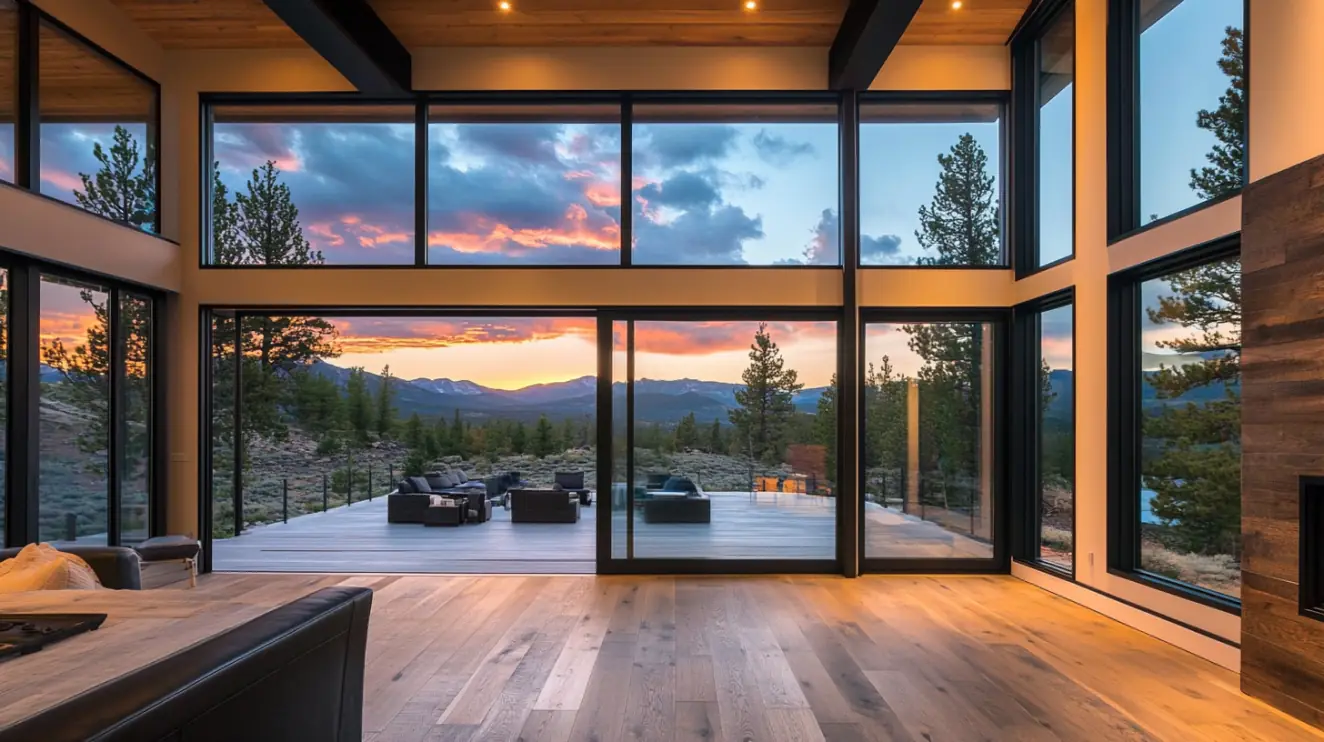
The architectural envelope of high-end residential estates across the United States depends entirely on the precision of its fenestration systems. Furthermore, when elite property owners commission luxury window installation usa, they navigate a sophisticated market. This domain is defined by architectural bronze frames, motorized pocket sliding walls, structural steel profiles, and advanced European thermal panes. Consequently, achieving structural resilience in these high-value projects demands an uncompromising commitment to specialized labor execution, careful rough opening preparation, and rigorous multi-tier waterproofing protocols.
Navigating this specialized tier of construction requires deep insight into custom manufacturing standards and complex job-site engineering logistics. High-end glazing goes far beyond standard window replacement practices. Specifically, it requires heavy-duty lifting equipment, structural steel reinforcement headers, and custom-engineered sub-frames. Without a calculated installation strategy, heavy glass assemblies risk frame distortion, seal failure, and severe building envelope breaches that undermine the entire architectural intent.
Therefore, achieving operational resilience throughout a luxury construction lifecycle involves treating fenestration placement as a critical load-bearing engineering intervention. Every regional climate—for example, from coastal salt-spray corridors to high-altitude alpine zones—demands specialized installation techniques and material compatibilities. By analyzing structural mechanics, artisan craftsmanship standards, and advanced water-resistive barrier integration, this guide provides an exhaustive blueprint for mastering premium fenestration execution nationwide.
Understanding Luxury Window Installation USA
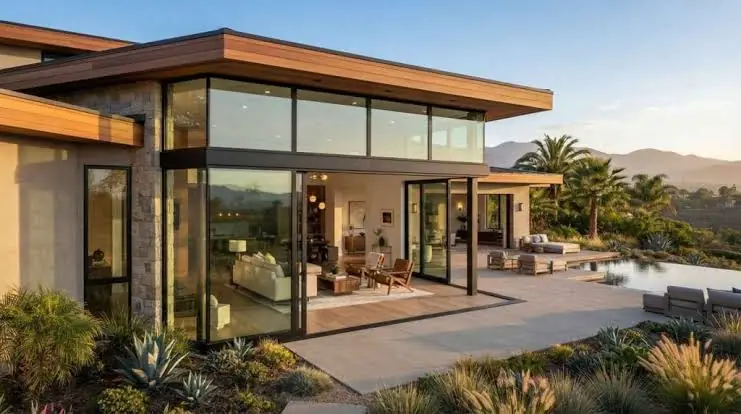
The core mechanics of examining luxury window installation usa center on recognizing where artisan-grade manufacturing tolerances intersect with heavy structural engineering. A pervasive misconception among project developers is that premium window products are self-supporting and can be installed using standard residential framing techniques. In practice, oversized steel-reinforced glass panels and motorized multi-slide pocket doors require precise load-transfer calculations. These calculations prevent structural header deflection from crushing the operational tracks below. Moreover, many subtle site shifts impact long-term mechanical alignment across projects.
Oversimplification risks abound when project managers assume that selecting an expensive European brand eliminates the need for specialized local installation oversight. For instance, failing to account for differential thermal movement between massive structural steel frames and surrounding timber substrates leads to severe glass stress fractures. Additionally, treating high-end fenestration as a routine carpentry task obscures how complex multi-stage flashing details and integrated motorized controls require specialized technical certifications.
Ultimately, a complete understanding requires evaluating luxury window installation usa through a comprehensive lifecycle lens. Excellence encompasses initial millwork coordination, structural pre-load engineering, multi-layer sill pan waterproofing, laser-guided calibration, and comprehensive post-installation warranty support. When any single technical variable is omitted from the execution plan, the entire luxury assembly degrades, resulting in costly thermal bridging, acoustic leakage, and structural remediation.
Deep Contextual Background
Historically, luxury fenestration in American architecture was characterized by heavy wood-framed double-hung windows or imported steel casements manufactured by regional millwork shops. These traditional assemblies relied on thick masonry walls and breathable building practices where minor moisture intrusion evaporated naturally without threatening interior finishes. Previously, builders worked within familiar regional traditions, fitting custom units directly to heavy timber structures with minimal chemical sealants.
The late twentieth and early twenty-first centuries transformed this landscape dramatically with the rise of modernism, expansive floor-to-ceiling glass walls, minimalist framing profiles, and sophisticated motorized automation systems. Simultaneously, the contemporary luxury market shifted toward massive architectural glass units designed to dissolve boundaries between indoor living spaces and outdoor environments. However, this architectural ambition created a profound chasm between factory engineering precision and traditional field labor execution.
In modern real estate markets across the United States, rising energy efficiency standards, stringent impact-resistance codes, and extreme weather volatility have elevated project complexity. Thus, property owners and elite architects can no longer rely on conventional subcontractor labor pools. Consequently, mastering top-tier execution has evolved into an exacting technical discipline requiring specialized rigging equipment, crane coordination, and certified structural glazing technicians.
Conceptual Frameworks and Mental Models
Navigating the execution of high-end fenestration projects requires specific mental models that bridge building physics with elite project management metrics.
The Structural Deflection Isolation Model
This framework posits that large luxury glass assemblies must be entirely isolated from structural building loads using floating sub-frames and header deflection tracks. In high-end construction, framing lumber and steel beams inevitably settle under live and dead loads. Consequently, failure to isolate the window frame guarantees catastrophic glass breakage.
The Multi-Barrier Water Management Hierarchy
Luxury architectural styles frequently feature flush sills, expansive sliding walls, and minimal roof overhangs that expose openings to severe weather forces. Accordingly, this mental model establishes that primary exterior seals will eventually admit moisture. It mandates a redundant system of sloped custom sill pans, capillary breaks, and concealed drainage planes.
The Thermal-Structural Equilibrium Matrix
High-end materials like architectural bronze, thermally broken aluminum, and structural steel exhibit high thermal conductivity or distinct expansion coefficients. To illustrate, this model weighs local climate extremes against material movement tolerances to prevent frame binding and seal degradation over seasonal cycles.
The Specialized Rigging and Labor Gradient
Luxury window installation usa involves multi-hundred-pound glass units and delicate artisan finishes that cannot be handled by standard framing crews. Therefore, this model evaluates the risk-reward ratio of deploying factory-certified artisan installation teams versus conventional general labor.
Key Categories or Variations in Premium Delivery Models
Execution frameworks across the American luxury fenestration market vary according to product origin, structural integration methods, and labor deployment strategies. Each model presents distinct operational trade-offs and quality control challenges.
-
European Architectural Import Integration: Direct importation of ultra-high-end tilt-turn or oversized sliding systems from specialized foreign manufacturers. Indeed, this delivers unmatched minimalist aesthetics and acoustic performance, but introduces severe supply chain vulnerabilities and requires metric-to-imperial structural conversions.
-
Custom Domestic Architectural Steel Fabrication: Bespoke steel window and door systems manufactured domestically to match historical or industrial-modern aesthetics. On one hand, it provides exceptional structural strength and narrow sightlines, while on the other hand, it demands heavy crane mobilization and specialized welding expertise on site.
-
Luxury Wood-Aluminum Clad Systems: Premium multi-layer wood interiors paired with low-maintenance exterior aluminum or bronze extrusions. Thus, it offers warm interior aesthetics combined with weather durability, although it requires precise moisture control during installation to prevent interior rot.
Advanced Automation and Façade Systems
-
Motorized Large-Format Multi-Slide Assemblies: Complex pocketing glass walls integrated with home automation networks. As a result, it maximizes indoor-outdoor connectivity, yet introduces high mechanical failure risks if structural track alignment shifts by even a fraction of a millimeter.
-
Curtain Wall and Structural Glass Façades: Engineered glass walls supported by internal structural steel mullions or glass fins for high-end modern estates. Specifically, it delivers expansive transparency, though it requires meticulous engineering review and specialized structural silicone glazing application.
-
Historic Restoration Custom Replica Units: Period-accurate fenestration designed to satisfy strict landmark preservation commissions while incorporating modern insulated glass units. In brief, it preserves architectural heritage, despite demanding exacting manual craftsmanship and slow regulatory approval loops.
| Delivery Model | Primary Material Base | Structural Complexity | Labor Requirement | Primary Operational Risk |
| European Imports | Aluminum / Wood-Alum | Extreme | Specialized Factory Crews | Metric conversion errors |
| Architectural Steel | Hot-Rolled Steel | Very High | Heavy Rigging & Welders | Thermal bridging / weight |
| Motorized Slide Walls | Aluminum / Glass | Extreme | Automation Technicians | Track deflection binding |
| Structural Glass | Glass Fins / Steel | Extreme | Structural Engineers | Sealant failure under wind |
| Historic Replicas | Wood / Bronze | Moderate to High | Master Carpenters | Landmark commission delays |
Realistic Decision Logic
Selecting a luxury window installation usa delivery model requires a cold assessment of the architectural style, regional wind-load requirements, and structural engineering capabilities. If, for example, a coastal estate in South Florida demands expansive glass openings, specifying standard European wood-framed tilt-turn units violates high-velocity hurricane zone codes; instead, heavy-gauge impact-rated aluminum or structural steel systems with certified impact testing must be deployed. Conversely, inland mountain luxury retreats favor thermally broken wood-aluminum systems designed to handle severe thermal differentials and heavy snow loads.
Detailed Real-World Scenarios
Analyzing practical execution environments illuminates how structural constraints and luxury design goals interact across high-end American residential markets.
A : Cliffside Modern Estate in the Pacific Northwest
-
Constraints: High wind-driven rain, cantilevered steel framing, expansive floor-to-ceiling glass walls.
-
Decision Points: The project team selects massive European-imported sliding glass doors with flush sill transitions and concealed drainage channels.
-
Failure Modes: Instead of following best practices, installers omit the continuous sloped sub-sill flashing membrane, trusting the exterior silicone sealant joint to block wind-driven moisture.
-
Second-Order Effects: During a major winter storm, positive wind pressure forces water past the exterior seal, thereby pooling inside the wall cavities and rotting the structural steel sub-framing beneath the subfloor.
B : Historic Restoration Penthouse in Manhattan
-
Constraints: Strict landmark preservation rules, high-rise wind loads, zero-tolerance hoisting logistics over a busy urban street.
-
Decision Points: The contractor utilizes custom-fabricated steel casement windows designed to replicate 1920s sightlines while housing modern double-pane insulated units.
-
Failure Modes: During the lift, crane operators miscalculate the hoisting radius during street-level lift operations, striking an adjacent architectural limestone cornice and halting the project.
-
Second-Order Effects: The incident triggers municipal stop-work orders, structural engineering reviews, and extensive legal negotiations, ultimately disrupting the luxury interior fit-out schedule.
C : Desert Compound in Scottsdale, Arizona
-
Constraints: Extreme diurnal temperature swings, intense UV radiation, abrasive wind-blown sand.
-
Decision Points: The builder specifies oversized thermally broken aluminum sliding glass units with specialized low-E solar control glass coatings.
-
Failure Modes: Regrettably, installers fail to incorporate adequate expansion joints around the perimeter frame to absorb extreme daytime thermal metal expansion.
-
Second-Order Effects: As daily temperatures spike, the expanding aluminum frames pinch the glass units, causing edge stress cracking and forcing an expensive complete re-installation.
Planning, Cost, and Resource Dynamics
Establishing economic control over elite fenestration projects requires navigating a complex matrix of direct and indirect financial commitments.
Direct costs encompass bespoke custom manufacturing expenses, specialized crane and rigging rentals, architectural engineering stamps, and artisan labor wages. Meanwhile, indirect costs represent the financial friction of installation errors: remanufacturing multi-ton glass panels, repairing damaged luxury interior finishes, and extending project carrying costs.
Opportunity costs manifest as the time penalty of coordinating overseas shipping schedules or custom metal fabrication lead times. Consequently, rushing installation preparations to meet arbitrary project deadlines routinely invites catastrophic execution errors that consume multiple times the initial project contingency budget.
| Expense Category | Description / Typical Elements | Financial Volatility | Optimization Potential |
| Custom Unit Manufacturing | Specialized glass, steel, bronze | High (Custom material tiers) | Low (Mandatory design specs) |
| Heavy Rigging & Hoisting | Cranes, specialized suction rigs | Moderate (Equipment rental rates) | Moderate (Optimized site scheduling) |
| Specialized Artisan Labor | Certified master installation crews | High (Scarce specialized talent) | Low (Essential for risk mitigation) |
| Sub-Sill Waterproofing | Custom metal pans, membranes | Low (Material overhead) | Maximum (Prevents catastrophic rot) |
Tools, Strategies, and Support Systems
Executing flawless luxury window installation usa requires an advanced suite of specialized physical tools, digital verification platforms, and administrative support systems.
-
Hydraulic Glass Manipulation Cranes and Robot Lifters: Essential for safely lifting and positioning multi-hundred-pound glass panes without structural edge damage.
-
Digital Laser Theodolites and Plumb Meters: Guarantee absolute millimeter-level alignment across expansive multi-bay structural openings.
-
Infrared Thermography Scanners: Detect hidden thermal bridging and air infiltration paths across complex architectural frame junctions.
-
Motorized Torque-Control Calibration Drivers: Prevent over-tightening of high-end frame anchors that distort precision-machined metal extrusions.
-
Custom-Fabricated Brake-Formed Sill Pans: Continuous metal flashing systems engineered to divert bulk water safely away from interior subfloors.
-
Acoustic Sound Testing Meters: Verify exterior noise reduction performance on luxury urban properties.
Despite their utility, limits exist within these systems. For example, laser measurement tools can be thrown off by reflective glass surfaces or extreme solar heat differentials on job sites. Therefore, administrative discipline remains entirely dependent on contractor adherence to manufacturer installation protocols.
Risk Landscape and Failure Modes
Failing to secure disciplined, high-caliber labor during luxury fenestration upgrades triggers a compounding cascade of physical and financial degradation across the building envelope.
The primary operational risk is catastrophic water infiltration and structural rot. When custom sill pans, flashing membranes, and drainage paths are improperly coordinated, bulk rainwater enters the building envelope, remaining hidden behind luxury millwork and expensive stone finishes until structural framing fails.
Furthermore, compounding risks emerge when structural frame distortion causes point-load pressure on oversized glass lites. As a result, this stress leads to spontaneous thermal cracking, high-end motor burnout on automated sliders, and severe acoustic or thermal performance degradation.
Governance, Maintenance, and Long-Term Adaptation
Maintaining the performance efficiency, aesthetic elegance, and warranty validity of luxury fenestration investments requires ongoing governance and adherence to rigorous industry standards.
Governance relies on standards established by organizations such as the Fenestration and Glazing Industry Alliance and American Architectural Manufacturers Association guidelines. In addition, contracts must explicitly define liability partitions between foreign or domestic manufacturers, general contractors, and specialized glazing subcontractors.
Routine maintenance cycles should involve semi-annual inspections of multi-point locking hardware, automated track lubrication, and exterior sealant elasticity. Moreover, property managers must clear concealed weep holes and drainage channels regularly to prevent water accumulation within precision metal tracks. Whenever weatherstripping or gaskets degrade, prompt replacement preserves the weather-tight integrity of the luxury envelope.
Measurement, Tracking, and Evaluation
Evaluating the long-term success of luxury window installation usa requires balancing quantitative engineering metrics against qualitative architectural craftsmanship signals.
Leading indicators include zero structural deflection variance logs, verified laser squareness reports, and complete manufacturer installation sign-off sheets. Conversely, lagging indicators encompass flawless mechanical slide operation, complete absence of water infiltration call-backs, and sustained thermal efficiency performance.
Documentation Framework Examples
-
Structural Opening Deflection Log: A baseline engineering document recording framing load tolerances and settlement projections prior to installation.
-
Specialized Rigging and Hoist Plan: A safety and logistics register detailing crane placement, weight distribution, and wind-speed operational limits.
-
Custom Sill Pan Waterproofing Certificate: A signed verification form confirming continuous membrane and drainage integration.
-
Manufacturer Warranty & Calibration Record: A centralized file containing product guarantees, motor automation specifications, and artisan labor bonds.
Common Misconceptions and Oversimplifications
-
Misconception 1: Purchasing ultra-luxury European or custom steel windows guarantees a straightforward installation process.
-
Correction: In reality, luxury fenestration systems require complex structural integration, heavy rigging, and specialized trade expertise that far exceeds standard construction.
-
-
Misconception 2: Standard residential rough framing can easily support heavy multi-ton glass walls and motorized sliders.
-
Correction: Instead, heavy glass assemblies require engineered structural steel headers and deflection tracks to prevent framing sag from crushing the window frames.
-
-
Misconception 3: Exterior silicone sealants provide permanent weather protection for luxury glass openings.
-
Correction: Rather than acting as primary barriers, sealants are secondary maintenance joints; primary weather protection relies entirely on integrated sloped sill pans and multi-layer drainage membranes.
-
-
Misconception 4: Lifetime product warranties cover labor costs and water damage resulting from improper installation.
-
Correction: In practice, product warranties cover manufacturing defects only; installation liability and water mitigation guarantees rest solely with the installing contractor.
-
-
Misconception 5: Automated sliding glass walls require no specialized maintenance once installed.
-
Correction: On the contrary, motorized systems require regular track cleaning, sensor calibration, and mechanical synchronization to prevent operational failure.
-
-
Misconception 6: On-site field measurements can be eyeballed if rough openings were built to architectural blueprints.
-
Correction: Because actual construction rarely matches blueprints, luxury window installation usa demands precise laser-verified field surveys before custom manufacturing begins.
-
Ethical, Practical, and Contextual Considerations
The responsibility of executing luxury window installation usa extends far beyond commercial contract fulfillment; rather, it touches upon structural safety, architectural heritage preservation, and environmental resource conservation. Luxury estates represent massive capital investments and complex environmental shelters. Consequently, careless installation practices result in premature material waste, severe structural damage, and immense financial loss for property owners.
Practically speaking, ensuring uncompromising installation standards protects inhabitants from structural decay, toxic mold growth, and acoustic or thermal discomfort. Therefore, industry professionals hold an ethical obligation to maintain rigorous technical standards, honoring the architectural integrity and structural safety of every high-end estate they modify.
Conclusion
Securing structural longevity, thermal efficiency, and long-term asset value across elite residential properties requires absolute mastery of luxury window installation usa mechanics. By prioritizing vetted artisan credentials, rigorous rough opening preparation, integrated flashing systems, and multi-tier warranty documentation over surface-level brand prestige, property owners can identify true execution excellence. Ultimately, navigating the luxury market with this rigorous analytical mindset ensures that every custom fenestration project delivers peak architectural performance, structural safety, and lasting aesthetic brilliance over its entire operational lifecycle.